
The Problem
Surprise medical bills—also known as “balance billing”—have long been one of the most pressing affordability concerns facing American families. Historically, most states allowed doctors to bill patients for any balance remaining after their health insurance paid its share. These charges were particularly devastating when out-of-network providers—who had no contractual rate agreements with insurers—billed patients for the full cost of care.
Today, with the No Surprises Act in place, patients are protected from most surprise medical bills. But new challenges have emerged. Certain private equity–backed providers and profit-focused intermediaries are now exploiting the law’s arbitration process as a business model to maximize revenue.
Instead of serving as a last-resort mechanism for payment disputes, the independent dispute resolution (IDR) process has been flooded with claims. Millions of cases have been filed since the law’s passage—far exceeding government projections—many of which are ineligible or inflated. This surge has created costly bottlenecks, slowed down legitimate dispute resolution, and burdened both health plans and employers with unnecessary administrative fees.
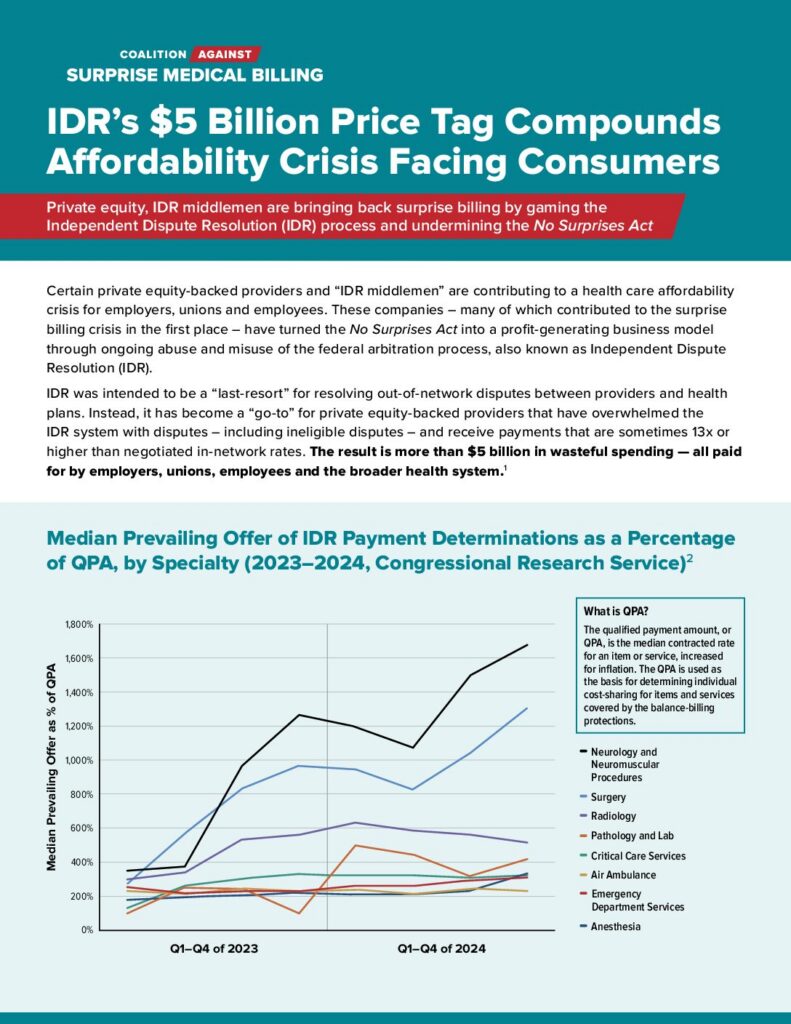
What’s more, data show that providers are prevailing more frequently in arbitration, and when they win, their awards are often many times higher than typical in-network or Medicare rates. This not only drives up direct costs for health plans but also raises premiums and out-of-pocket expenses for American families. Meanwhile, IDR entities are not required to provide full explanations of their decisions, and the law lacks a clear appeals process—leaving limited accountability or oversight.

Latest News
Even More Disputes, Even Higher Costs: The Latest IDR Warning Signs
After a new federal rule slashed the administrative fee for initiating IDR disputes by 87% — from $115 to just $15, nearly 400,000 disputes were initiated in July 2026 alone. This 24% jump in just one month is one of the latest signals that the IDR process has veered...
The Ripple Effect of Runaway Arbitration Awards: Fewer In-Network Docs, Higher Premiums
A new working paper from the National Bureau of Economic Research finds that the No Surprises Act’s arbitration process is incentivizing providers to go out-of-network and driving higher premiums. The economists estimate that the undue costs of the independent dispute...
Latest CASMB Ad Campaign Calls on Congress & White House to Tackle IDR Affordability Crisis Facing Employers, Consumers
Washington, D.C. — As Congress and the White House look to address the healthcare affordability crisis facing employers and consumers, the Coalition Against Surprise Medical Billing (CASMB) today launched its latest ad, “Real Relief,” urging lawmakers and the Trump...